
Online enrolment of nationals abroad
No diaspora policy can be built without knowing who the diaspora is. Enrolment is the first building block: it turns an estimated population into a named, verified register that stays current.
What a paper register actually costs
A register kept on paper or in a per-post spreadsheet does not fail all at once: it decays. An address changes and is never reported, a national returns home without deregistering, a namesake is entered twice.
After a few years the register no longer supports contacting the diaspora in a crisis, sizing a service, or answering a parliamentary question on how many nationals live in a given country.
Three enrolment channels
A single channel never reaches a whole diaspora. All three coexist and feed the same register.
- Online self-enrolment — the national completes their file and uploads documents from their phone, with no travel
- Enrolment through a partner association — a diaspora association authorised by the mission enrols its members, including those without independent digital access
- Consular counter — the officer enters the file during the visit, with the original documents in hand
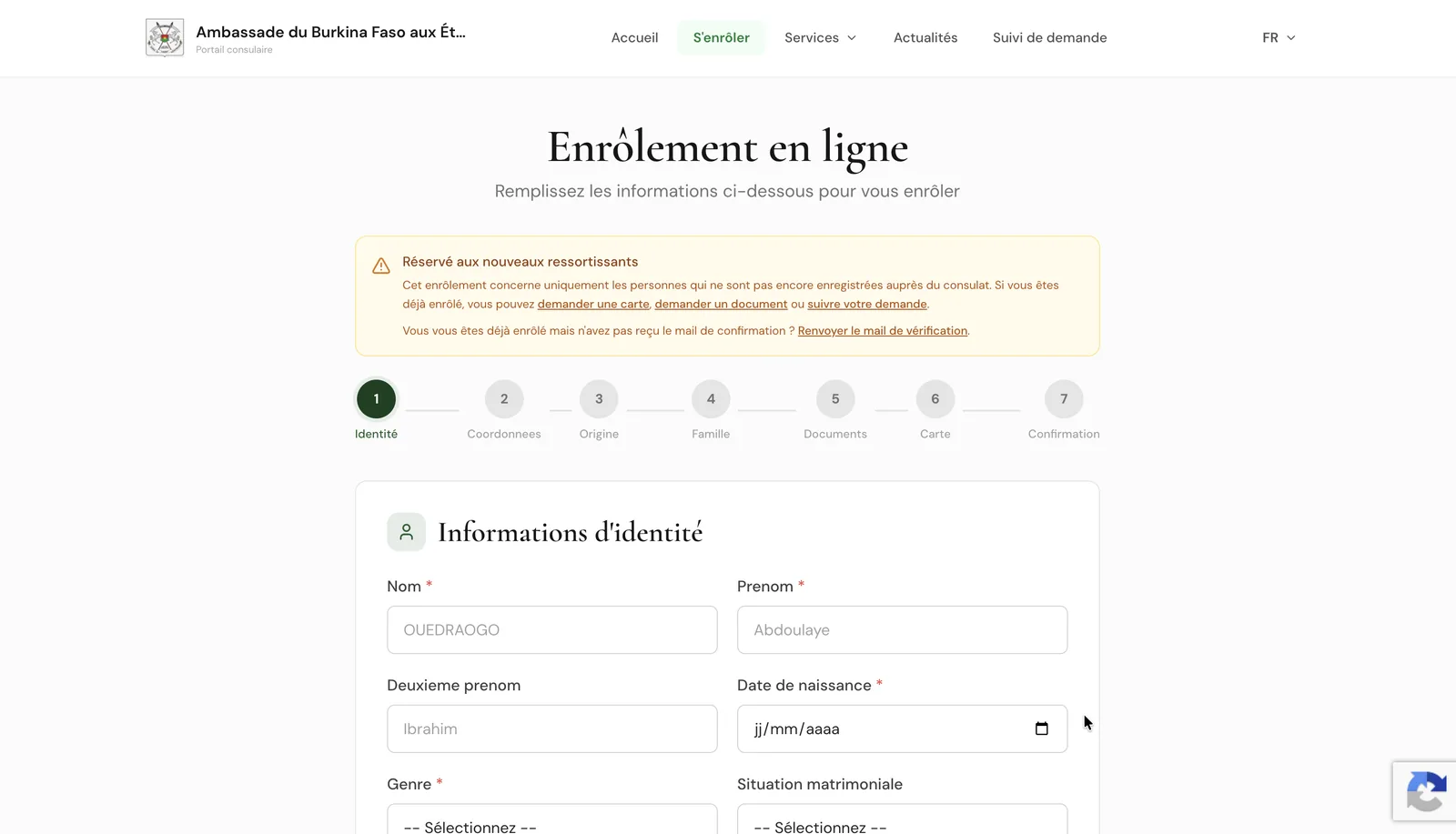
Supporting documents and validation
Every file carries the documents the mission expects, uploaded as photos or PDFs. An officer reviews the application: they approve it, or return it with an explicit reason sent to the national by email.
A returned file stays editable by its owner, who fixes only the document at fault. There is never a full re-entry, which is the main reason people abandon an online procedure.
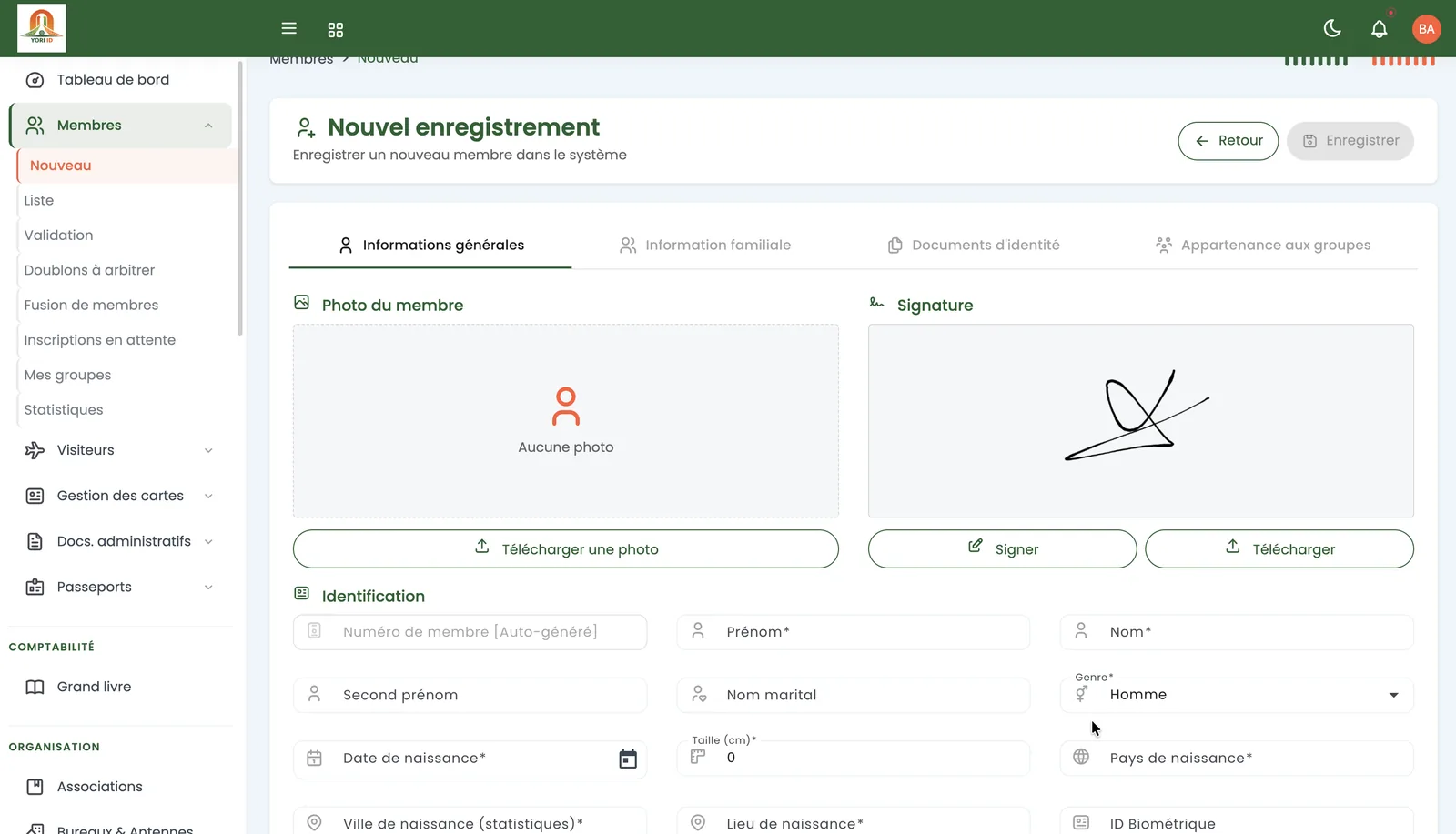
Record lifecycle
A record is not frozen at creation. It follows the national: change of address, birth, marriage, change of attached mission after a move, deregistration on permanent return. Every change is timestamped and attributed.
Reporting and statistics
The register informs decisions: breakdown by country of residence, age bracket and attached mission, and enrolment trends over time. Extracts export to an open format for use outside the platform.
Frequently asked questions
Can a national without a smartphone enrol?
Yes, through the other two channels: at the consular counter, or via an authorised diaspora association. That is the purpose of the association channel, rarely offered by existing solutions.
How are duplicates avoided?
A check runs at creation against whatever identifiers are available — national ID document, civil status, contact details. Uncertain matches are presented to an officer rather than merged automatically.
What happens to a record on permanent return?
It is deregistered, not deleted: issued cards and documents remain traceable, which any later verification requires.
Can an existing register be imported?
Yes. A migration precedes deployment, with de-duplication and a report of rows that could not be migrated for manual handling.